Journal
Argan oil: the complete guide
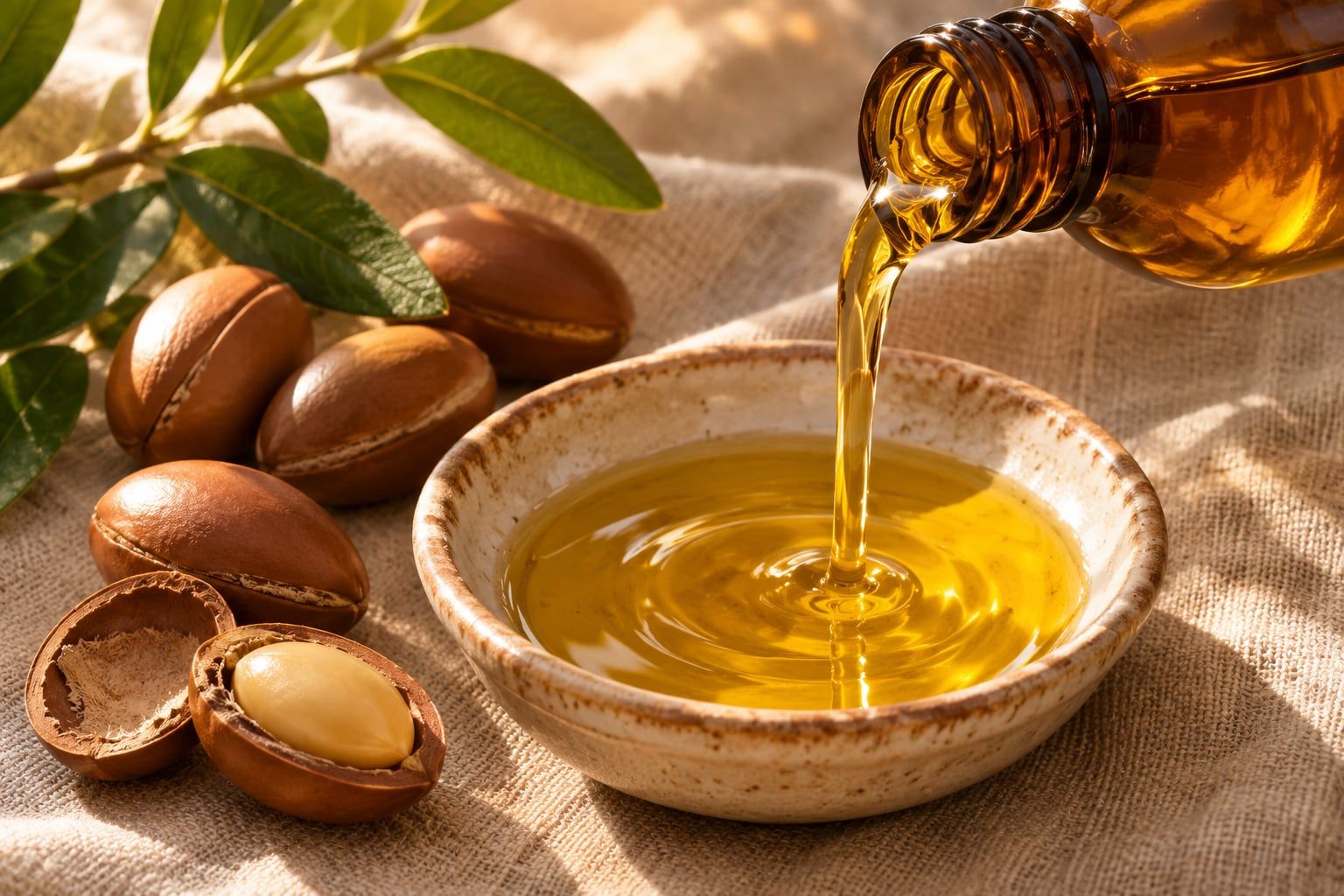
Nicknamed "Morocco's liquid gold", argan oil is pressed from the kernels of the argan tree, which only grows wild in south-west Morocco. Here is everything you need to choose it well and use it well.
Where does argan oil come from?
The argan tree (Argania spinosa) grows in the Souss region, between Essaouira, Agadir and Taroudant. The argan forest has been a UNESCO biosphere reserve since 1998. The fruit is harvested and dried, then the nuts are cracked by hand — traditionally by Amazigh women in cooperatives — to free the kernels.
Cosmetic vs culinary: what's the difference?
Cosmetic oil is cold-pressed from raw kernels: golden yellow with a very faint scent. Culinary oil comes from roasted kernels: darker, with a strong nutty taste, for cooking. For skin and hair, always choose cold-pressed cosmetic oil.
What are its benefits?
Argan oil is rich in fatty acids (oleic and linoleic) and vitamin E. It nourishes and softens skin, helps protect dry hair ends and softens nails. It absorbs quickly without a greasy film, making it suitable for most skin types.
How do you use it?
Face: 2–3 drops at night on clean skin. Body: a few drops on damp skin after the shower. Hair: as an oil bath 30 minutes before shampoo, or one drop on the ends to finish. Nails: massage into cuticles at night.
How to spot authentic argan oil
The INCI list should show one ingredient: Argania Spinosa Kernel Oil. The scent is subtle and slightly green; a strong roasted-nut smell means culinary oil, no smell at all may mean refined oil. Prefer amber glass, which protects the oil from light.
Frequently asked questions
Does argan oil clog pores?
It is considered low-comedogenic. Start with two drops at night to see how your skin responds.
How long does it keep?
About 12 months after opening, away from light and heat.
Can I use it on oily hair?
Yes, on the ends only, or as a pre-shampoo oil bath.